Introduction
Inspiration is powerful, but it is not enough to sustain an assignment.
Many leaders receive vision, feel urgency, get stirred by purpose, and begin moving with passion. But somewhere along the way, the weight of the assignment exposes the absence of structure.
The problem is not always lack of calling.
Sometimes the problem is lack of infrastructure.
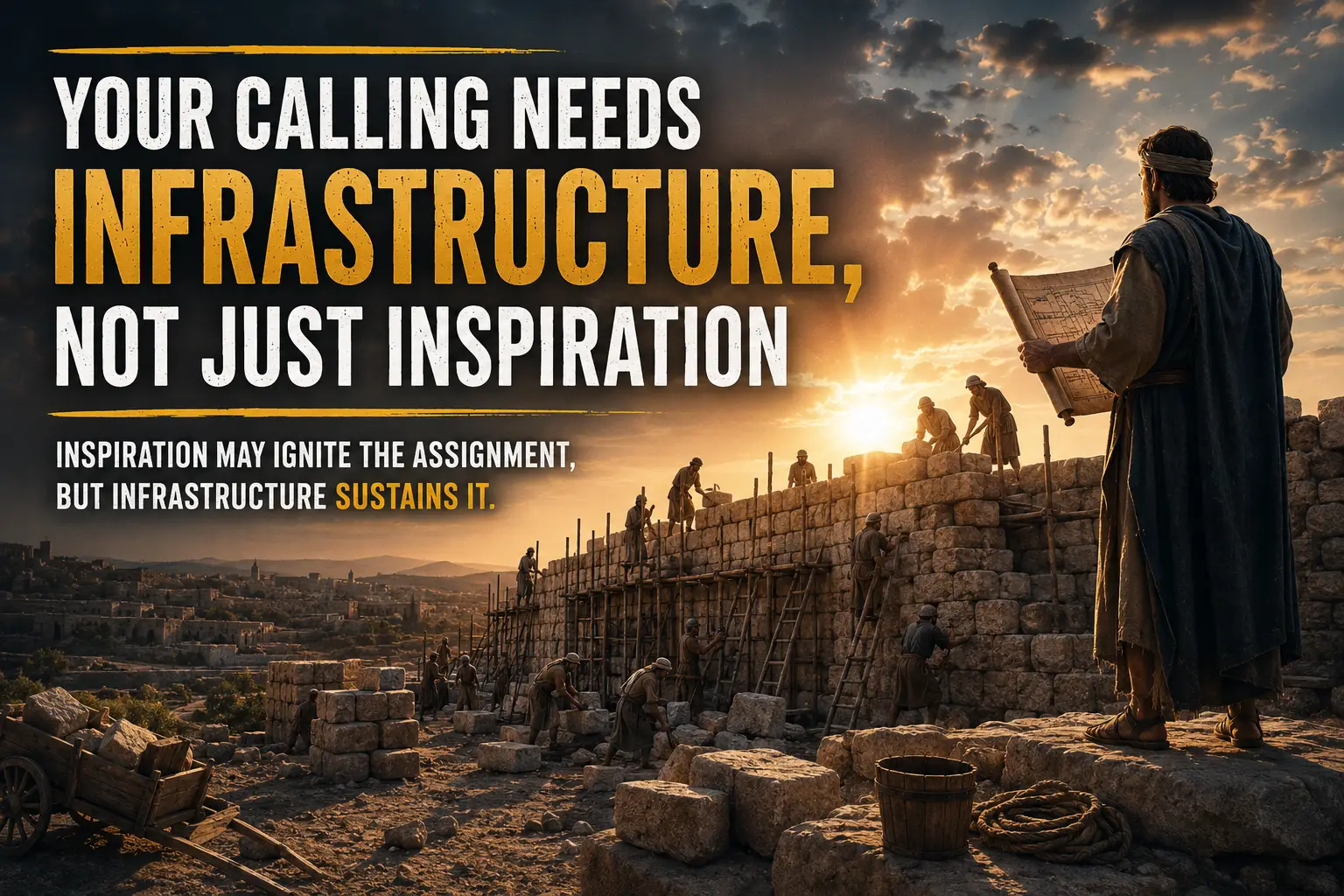
Nehemiah did not rebuild the wall with inspiration alone. He prayed, wept, discerned, inspected, organized, assigned, corrected, defended, and built.
The wall required burden. But it also required structure.
Key Takeaways
- Inspiration may ignite the assignment, but infrastructure sustains it.
- Calling without structure eventually becomes unnecessary strain.
- Nehemiah shows us that spiritual burden must become practical obedience.
- Vision requires inspection before execution.
- Systems are not unspiritual when they serve the assignment.
- Strong infrastructure protects people, resources, momentum, and mission.
- Opposition often exposes whether your structure is strong enough to carry the vision.
- Kingdom builders must learn to pray deeply and build wisely.
Scriptural Anchor
“Then I said to them, ‘You see the trouble we are in, how Jerusalem lies in ruins with its gates burned. Come, let us build the wall of Jerusalem, that we may no longer suffer derision.’ And I told them of the hand of my God that had been upon me for good… And they said, ‘Let us rise up and build.’ So they strengthened their hands for the good work.” Nehemiah 2:17–18
Inspiration Begins With Burden
Nehemiah did not start with a strategy session. He started with a burden.
He heard the condition of Jerusalem and sat down, wept, mourned, fasted, and prayed. The assignment was first formed in the secret place before it became public work.
That matters because true calling usually begins as holy discomfort. Something is broken. Something is exposed. Something in you refuses to make peace with what others have learned to tolerate.
But burden alone is not infrastructure. Burden reveals what you are assigned to repair. Structure helps you actually rebuild it.
Prayer Was the Beginning, Not the Substitute for Building
Nehemiah prayed, but he did not stop at prayer.
Prayer aligned him. Prayer clarified him. Prayer strengthened him. But eventually, prayer had to become movement.
Some leaders use prayer to avoid planning. Others use planning to avoid dependence on God. Nehemiah models both spiritual dependence and practical responsibility.
Prayer does not eliminate the need for structure. Structure does not replace the need for prayer.
Before Nehemiah Built, He Inspected
Nehemiah did not announce a building campaign before he understood the condition of the wall.
He went out at night and inspected the damage.
Vision must be honest enough to inspect reality. Leaders cannot rebuild what they refuse to assess. Inspection is not unbelief. It is stewardship.
Audit the business. Inspect the team. Review the finances. Assess the systems. Identify bottlenecks. Name the broken gates.
You cannot structure around assumptions. Clarity comes when burden meets examination.
The Wall Required Assignment, Not Vague Enthusiasm
The people did not simply gather around the idea of rebuilding. They were assigned sections.
Vision dies when everybody is inspired but nobody is responsible.
Ownership requires assignment. Clear roles protect momentum. People need to know what part of the wall is theirs.
Calling scales when responsibility is distributed. Define roles. Clarify responsibilities. Build team lanes. Stop expecting passion to replace process.
Infrastructure Protects the People Carrying the Vision
Without infrastructure, the weight of the vision falls on the strongest few.
That is not stewardship. That is slow burnout.
Systems are not about control. They are about care. Healthy infrastructure protects people from confusion, overload, missed expectations, and unnecessary emotional labor.
A Kingdom assignment should not destroy the people called to carry it. Build calendars, communication rhythms, decision frameworks, onboarding systems, financial controls, delegation lanes, and follow-up processes that protect the mission and the people.
Opposition Exposes Weak Infrastructure
When opposition came, Nehemiah did not abandon the work. He adjusted the structure.
The builders worked with a tool in one hand and a weapon in the other.
“Those who carried burdens were loaded in such a way that each labored on the work with one hand and held his weapon with the other.” Nehemiah 4:17
Opposition does not always mean you are wrong. Sometimes opposition reveals where structure must mature.
What happens when a key person leaves? When revenue dips? When criticism comes? When growth accelerates? When the leader is unavailable? Crisis reveals whether your systems can withstand pressure.
Calling Requires Both Sword and Trowel
Nehemiah’s workers carried both tools and weapons.
That image matters.
The trowel represents construction. The sword represents discernment and defense. Builders who cannot defend become vulnerable. Defenders who never build become reactionary.
Mature leadership knows when to build and when to guard. Build systems. Guard culture. Protect focus. Defend mission. Confront distraction. Preserve alignment.
Systems Must Serve Calling, Not Control It
Infrastructure becomes dangerous when it replaces dependence on God.
The goal is not bureaucracy. The goal is faithful stewardship.
Systems are servants, not masters. Structure should increase capacity, not suffocate calling. Over-control kills movement. Under-structure kills sustainability.
Kingdom infrastructure keeps the mission alive without making the machine the mission.
Rebuilding Requires Leadership Courage
Nehemiah had to confront external opposition and internal dysfunction.
He corrected injustice. Addressed fatigue. Answered criticism. Refused distraction. Protected the people. Kept the work moving.
Infrastructure is not only operational. It is cultural.
Avoiding conflict creates cracks in the wall. Some leaders want the fruit of structure without the courage to enforce alignment.
The Wall Was Finished Because the Work Was Organized
The miracle of Nehemiah was not just that the wall was rebuilt.
It was rebuilt with order, urgency, unity, and assignment.
God’s favor did not eliminate human responsibility. The people strengthened their hands for the work. The vision became visible because the burden became organized.
Heaven-backed work still requires earthly stewardship.
The Leadership Application
Your calling needs more than passion. It needs systems that can hold what God is asking you to carry.
For entrepreneurs, that may mean offers, operations, finances, fulfillment, lead flow, follow-up, team lanes, and customer experience.
For ministry leaders, that may mean discipleship pathways, volunteer systems, care structures, communication rhythms, accountability, and leadership development.
For a deeper look at building systems that support calling without controlling it, read Build the Machine: Systems That Support Your Calling.
Conclusion
Your calling does not only need passion.
It needs infrastructure.
A burden may begin the work, but burden alone cannot sustain it. Inspiration may move people emotionally, but structure helps them move faithfully.
Nehemiah teaches us that Kingdom builders must pray deeply and build wisely.
The wall does not rebuild itself because someone felt inspired. It rises when burden becomes obedience, and obedience becomes structure.
Frequently Asked Questions
What does it mean that calling needs infrastructure?
It means your assignment needs systems, structure, people, processes, and rhythms that can sustain the vision over time.
Is building systems unspiritual?
No. Systems become unspiritual only when they replace dependence on God or begin controlling the calling instead of serving it.
Why is Nehemiah a strong example of infrastructure?
Nehemiah combined prayer, discernment, planning, inspection, assignment, defense, correction, and execution to rebuild Jerusalem’s wall.
What happens when leaders rely only on inspiration?
They often create momentum without sustainability. Over time, the work becomes chaotic, exhausting, and overly dependent on a few people.
How do I know where infrastructure is missing?
Look for repeated confusion, bottlenecks, missed follow-up, unclear ownership, decision fatigue, burnout, inconsistent execution, or growth that creates disorder.
What is the difference between structure and control?
Structure serves the mission and empowers people. Control protects the leader’s fear and restricts healthy movement.
What are examples of infrastructure in business or ministry?
Examples include documented processes, team roles, financial systems, calendars, communication rhythms, onboarding, delegation plans, and accountability structures.
What is the first step to building infrastructure?
Inspect the wall. Before building anything new, honestly assess what is broken, missing, overloaded, unclear, or unsustainable.
Continue Reading