Introduction
There are seasons that end quietly.
No announcement. No dramatic collapse. No single moment you can point to and say, “That was it.” Things simply stop carrying life the way they once did.
What used to feel natural begins to feel forced. What once carried momentum now requires constant effort just to maintain. The grace that used to rest on something begins to lift, and even though the structure may still exist, something inside you knows the season itself is over.
Most leaders recognize this long before they admit it.
That is what makes these transitions difficult. The issue is rarely awareness. It is acceptance.
Because once you accept a season has ended, another reality immediately confronts you: something will have to be released. Not just practically. Emotionally.
And that is where many people quietly get stuck. They continue moving externally while remaining emotionally tied to what they know has already ended. They preserve access to old seasons, old identities, old structures, and old versions of themselves—not because God is calling them back, but because they never fully grieved what those things represented.
Key Takeaways
- Some leaders remain stuck because they never fully grieved what a closed season represented.
- Unprocessed grief often disguises itself as caution, loyalty, discernment, or wisdom.
- Keeping emotional access to expired seasons creates divided focus and hesitation.
- God often requires release before He establishes movement into the next assignment.
- Nostalgia can become resistance when it prevents present obedience.
- You cannot fully embrace a new season while emotionally preserving the old one.
- Closure is not betrayal; it is often the final act of obedience.
- Healing and alignment require both honest grief and complete surrender.
Some Doors Stay Open Emotionally
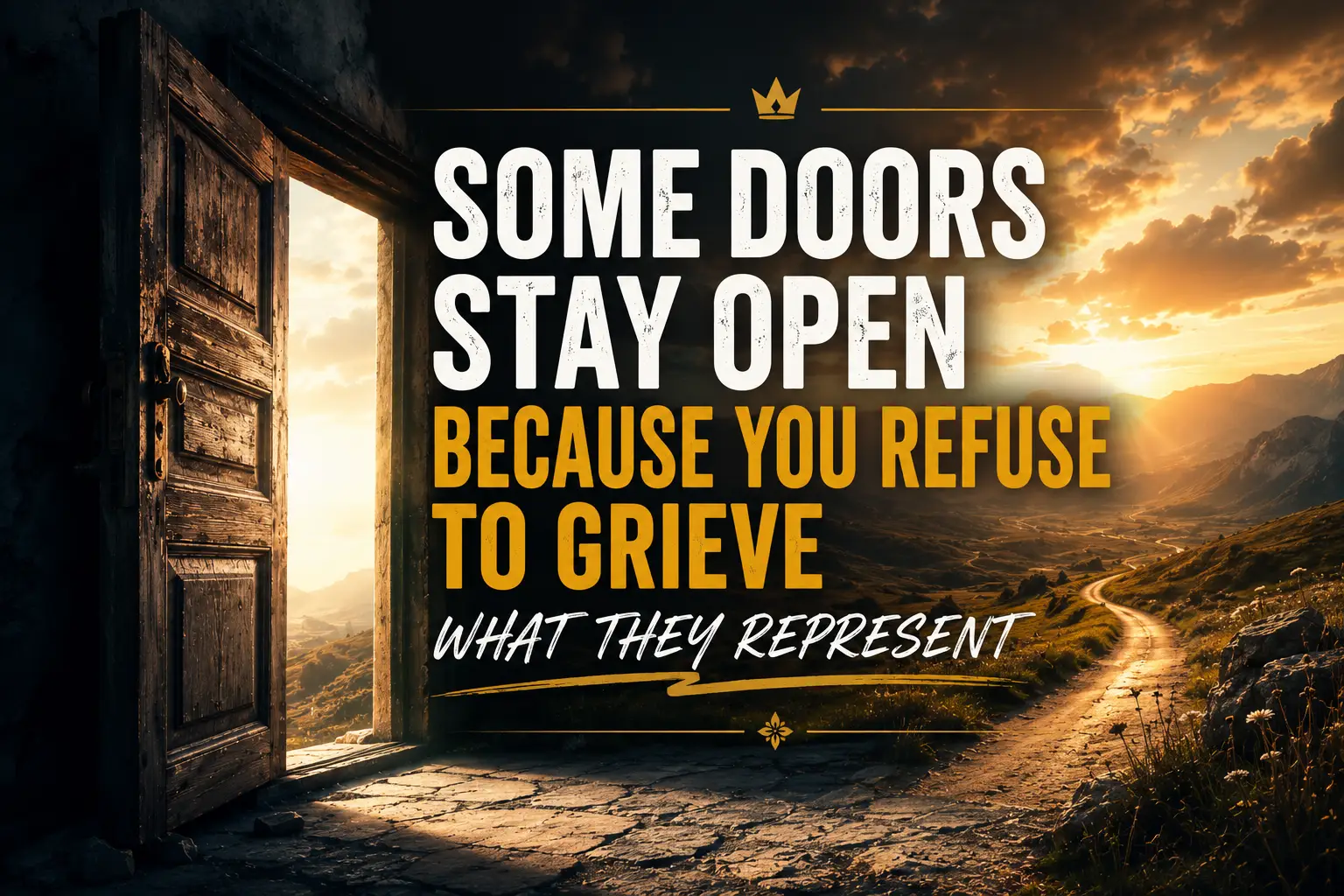
The door stays open, not always operationally, but emotionally. And unresolved attachment has a way of quietly shaping decisions long after a season should have been closed.
One of the most difficult things for leaders to admit is that grief does not only follow death. Sometimes grief follows transition.
You grieve what a season meant to you. You grieve who you were inside it. You grieve the certainty it once provided, the identity attached to it, the familiarity of it, and the significance of it.
Most people never acknowledge this honestly because they have been taught to interpret grief as weakness. So instead of processing it, they spiritualize it. They call it discernment. They call it caution. They call it wisdom or patience or “keeping options open.”
The Grief Most Leaders Never Acknowledge
Many times, what leaders are actually doing is mourning something they never fully released. Because grief was never processed, the door remains emotionally cracked open.
That is why some people revisit the same conversations internally for years. They mentally rehearse old opportunities. They continuously compare every new season to a previous one. They struggle to fully commit to what is in front of them while constantly reaching backward emotionally.
They are not lacking clarity.
They are grieving.
When Looking Back Becomes Resistance
Scripture reveals this pattern repeatedly.
Lot’s wife is one of the clearest examples. Physically, she left Sodom. Emotionally, she had not.
“Remember Lot’s wife.” Luke 17:32
She did not look back because she lacked information. She looked back because part of her was still attached to what God was calling her out of.
And attachment changes direction.
That is what unresolved grief does. It keeps part of your heart emotionally tethered to a place your future can no longer be built from.
Nostalgia Can Rewrite Memory
The danger is not always rebellion. Sometimes it is nostalgia.
Nostalgia has a way of rewriting memory. It edits out the pain and preserves only the familiarity. Israel did this repeatedly in the wilderness. After generations of bondage, they still romanticized Egypt once transition became uncomfortable.
They remembered food but forgot slavery.
That is what emotional attachment does. It selectively remembers what supports the desire to return.
Leaders do this constantly. They revisit old systems because they were familiar. They long for old seasons because they felt safer. They preserve expired structures because those structures once gave them identity.
You Keep Calling It Loyalty, But It’s Fear of Letting Go
What many call loyalty is often fear of letting go.
The deeper issue is that unresolved grief creates divided movement. Part of you wants the future. Another part of you is still negotiating with the past.
So you hesitate. You second-guess decisions you already made. You leave emotional exits available “just in case.” You struggle to fully commit because commitment would require acknowledging that a previous season is truly over.
“A double minded man is unstable in all his ways.” James 1:8
You cannot fully embrace what is next while preserving emotional residence in what was. Eventually one of them will interfere with the other.
God Often Requires Separation Before Increase
This is why God so often requires separation before increase.
Abraham had to leave his father’s house. Israel had to leave Egypt. The disciples had to leave their nets. Elisha burned the oxen before following Elijah.
That moment with Elisha matters more than most people realize. He did not merely walk away from his former livelihood. He destroyed his ability to casually return to it.
“He took the yoke of oxen and sacrificed them.” 1 Kings 19:21
Full commitment often requires intentional closure—not out of disrespect for what was, but out of obedience to what is next.
Closure Is Not Betrayal
Too many people try to carry previous identities into new assignments. They want transformation without separation. They want the future while preserving unrestricted emotional access to the past.
But some transitions only become clear once retreat is no longer treated as an option.
That is why unresolved grief becomes dangerous in leadership. It quietly keeps doors open that should have been closed—not because the previous season was evil or without value, but because it no longer belongs in your future in the same way it once did.
There is a difference between gratitude and attachment.
Maturity honors previous seasons without trying to live inside them forever. For a deeper look at alignment and leadership fatigue, read You’re Not Burned Out—You’re Out of Alignment.
God Cannot Fully Fill Hands That Refuse to Release
Some of the heaviest seasons in leadership happen when people continue trying to steward what heaven already ended.
You can feel the strain in it. What once carried grace now requires constant striving. What once felt aligned now feels forced. The energy required to sustain it becomes disproportionate because you are attempting to preserve something beyond its appointed season.
Ecclesiastes says there is a time for every purpose under heaven. That means timing itself matters.
Even good things become burdens when carried beyond their season.
This is why systems must serve calling, not control it. If you are rebuilding around the next assignment, read Build the Machine: Systems That Support Your Calling.
Grief Must Be Processed, Not Suppressed
Real surrender rarely feels clean in the moment. There is grief in releasing identities that once mattered deeply. There is grief in leaving behind structures that once gave meaning. There is grief in acknowledging that a role, a season, a relationship, or even a version of yourself cannot continue into the future in the same form.
Ignoring that grief does not make it disappear. It only pushes it underground where it begins influencing decisions indirectly.
Unprocessed grief shows up as hesitation, emotional paralysis, inability to commit fully, and constant revisiting of what should have already been settled.
Eventually, people mistake the emotional exhaustion of divided attachment for spiritual confusion. But clarity is often not the issue. Closure is.
Forget What Lies Behind Without Denying It Happened
Paul writes in Philippians that he forgets what lies behind and presses forward toward what lies ahead. That does not mean Paul had no memory. It means the past no longer governed his movement.
That is the difference.
Healthy remembrance honors what was. Unresolved attachment keeps living there emotionally.
“Forget the former things; do not dwell on the past. See, I am doing a new thing.” Isaiah 43:18–19
The command is not to deny the past existed. The command is not to dwell there. Because whatever you continually dwell on will eventually shape your direction.
Conclusion
Some doors stay open because grief keeps reopening them internally.
Not every door needs another evaluation. Not every season needs revisiting. Not every former identity deserves permanent emotional access to your future.
Some things need to be acknowledged honestly, grieved properly, thanked for what they once were, and released completely.
That is not betrayal.
That is maturity. Because honoring what God once used should never prevent obedience to what He is doing now.
Frequently Asked Questions
How do I know if I’m grieving an old season instead of discerning wisely?
If you continually revisit a former opportunity, role, relationship, or identity while struggling to fully commit to the present, unresolved grief may be influencing your decisions.
Is it wrong to miss a previous season of life or leadership?
No. Honoring and appreciating past seasons is healthy. The issue begins when nostalgia prevents obedience to the next assignment.
Why do leaders struggle to process grief honestly?
Many leaders equate grief with weakness, so they suppress it instead of processing it. But unprocessed grief often resurfaces as hesitation, emotional attachment, and resistance to change.
What does unresolved grief look like in leadership?
It can show up as indecision, attachment to expired structures, constant comparison to the past, reluctance to close doors, or fear of releasing old systems.
What can we learn from Lot’s wife looking back?
Her story shows that physical movement forward means little if the heart remains emotionally tied to what God already called you out of.
Why did Elisha burn the oxen?
Elisha burned the tools of his former livelihood as an act of full separation. He removed the option of casual return before stepping into his next assignment.
How do I begin closing doors that still hold emotional weight?
Acknowledge what the season represented, grieve it honestly, thank God for what it served, and intentionally release it instead of preserving emotional access to it.
Continue Reading